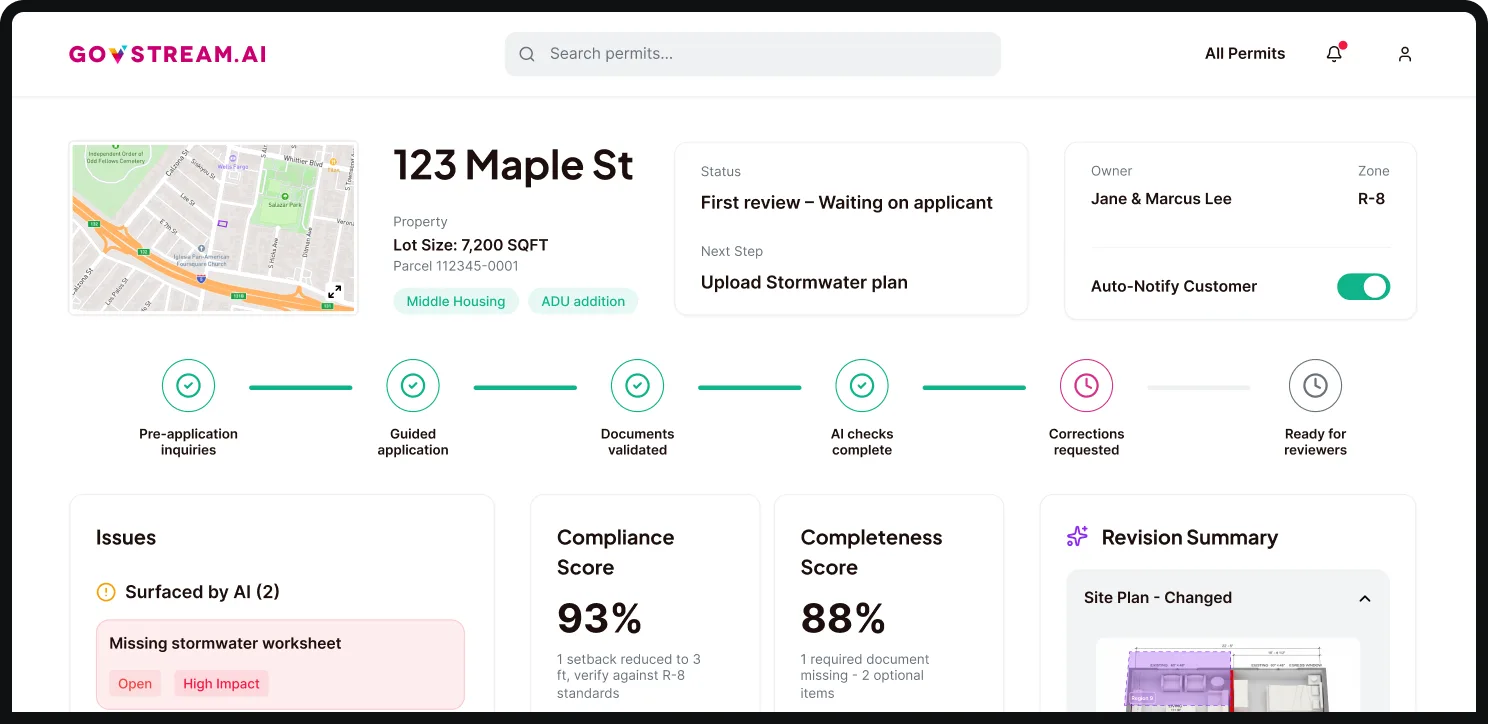
Inside Govstream.ai: How we design with cities, not just for them
We don’t build in a vacuum. This post takes you behind the scenes of our design partner program and shows how real cities shape what Govstream.ai becomes.
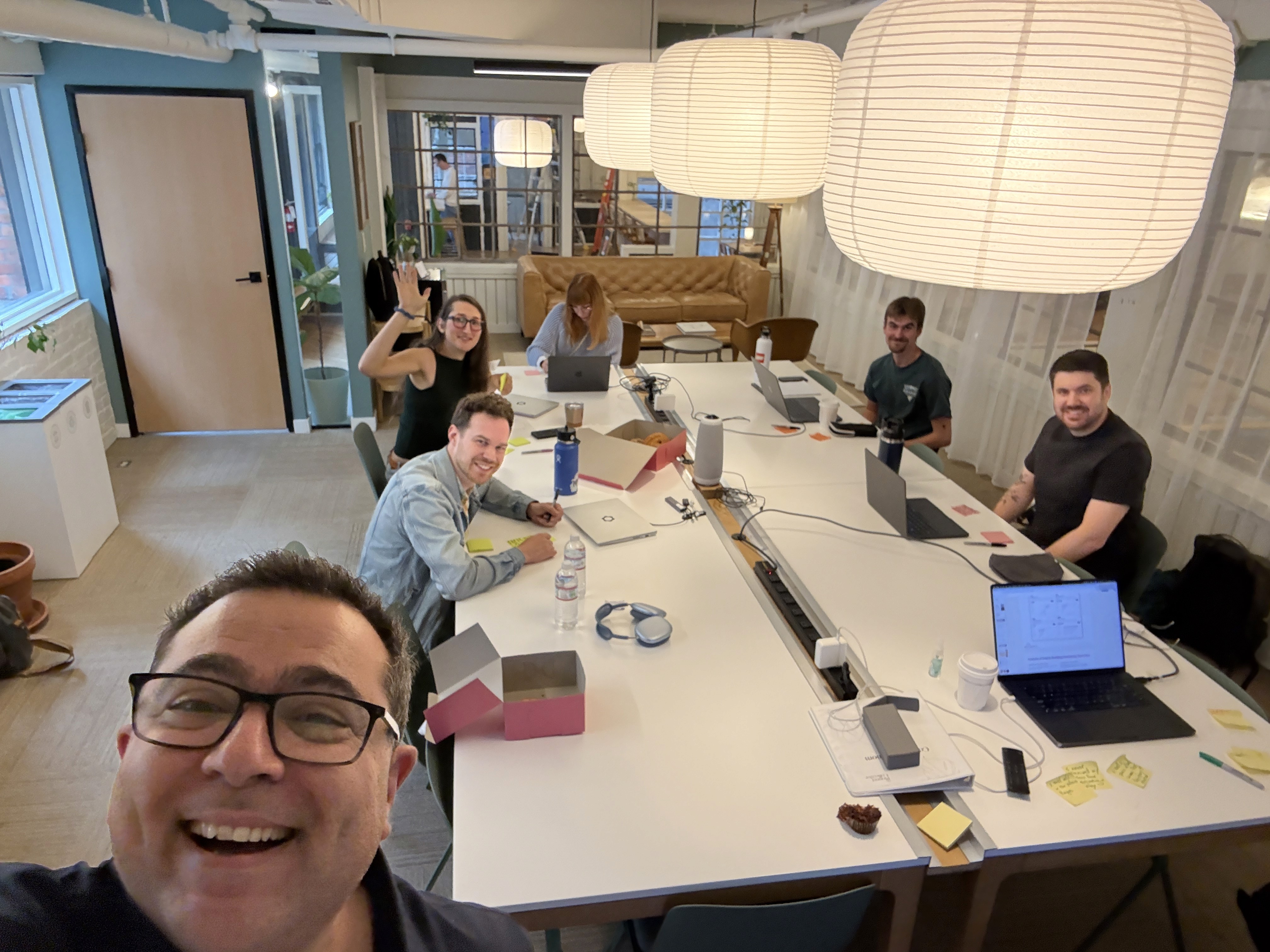
Table of contents
We believe good civic tech starts with trust, not templates. This is how our team works directly with city staff to build tools that solve real-world problems — not just ship features.
At Govstream.ai, we don’t build behind closed doors. From day one, we knew that if we wanted to modernize permitting and unlock housing, we had to start with the people doing the work — planners, reviewers, intake staff, city IT leaders. Not just to “interview users,” but to design the entire product experience with them. That means co-creating tools alongside public servants, validating ideas early, and making sure our roadmap reflects their realities, not just our assumptions.
At Govstream.ai, we don’t build behind closed doors. From day one, we knew that if we wanted to modernize permitting and unlock housing, we had to start with the people doing the work — planners, reviewers, intake staff, city IT leaders. Not just to “interview users,” but to design the entire product experience with them. That means co-creating tools alongside public servants, validating ideas early, and making sure our roadmap reflects their realities, not just our assumptions.
Co-creation, not just consultation
This approach began before we even wrote a line of code. We started by listening — sitting in on permitting meetings, shadowing intake staff, asking dumb questions, and paying attention to what broke down. Cities aren’t software companies, and their workflows don’t fit neatly into product backlogs. We had to earn trust, learn the language, and understand the pressures — from public scrutiny to budget cycles — that shape every decision.
Our first prototypes were built with real permitting staff on weekly calls. We tested screen flows live, clicked through mockups together, and got immediate reactions. “That button doesn’t make sense.” “We’d never ask that question upfront.” “This would save us three emails per application.” It was humbling — and exactly what we needed. The result wasn’t just better UX; it was alignment. City teams felt ownership because they’d shaped the tool from the inside.
Co-creation, not just consultation
This approach began before we even wrote a line of code. We started by listening — sitting in on permitting meetings, shadowing intake staff, asking dumb questions, and paying attention to what broke down. Cities aren’t software companies, and their workflows don’t fit neatly into product backlogs. We had to earn trust, learn the language, and understand the pressures — from public scrutiny to budget cycles — that shape every decision.
Our first prototypes were built with real permitting staff on weekly calls. We tested screen flows live, clicked through mockups together, and got immediate reactions. “That button doesn’t make sense.” “We’d never ask that question upfront.” “This would save us three emails per application.” It was humbling — and exactly what we needed. The result wasn’t just better UX; it was alignment. City teams felt ownership because they’d shaped the tool from the inside.
Designing for adoption and impact
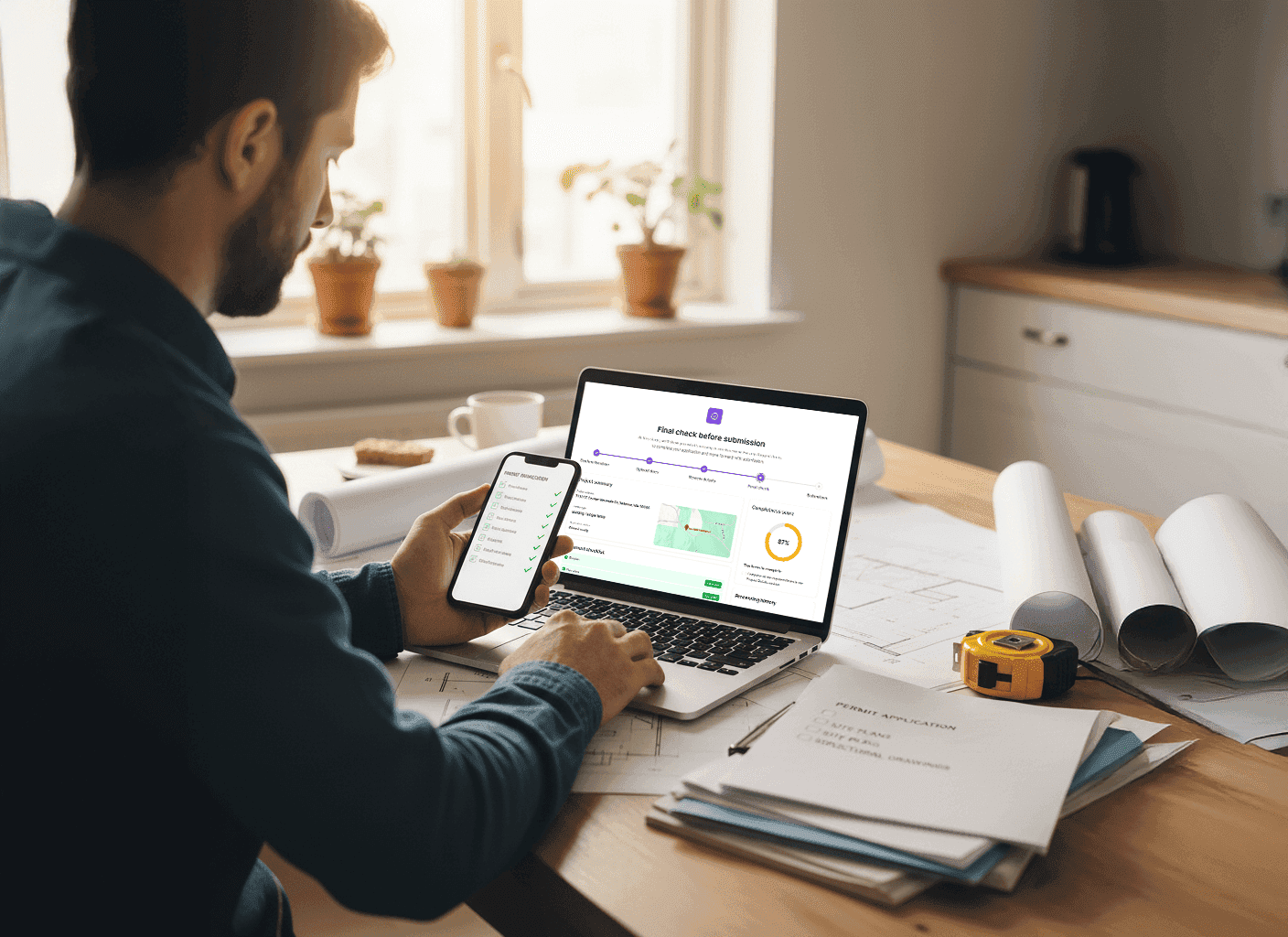
This co-design model also helps us avoid the trap of overbuilding. In government, complexity kills adoption. Every feature has to be clear, explainable, and usable from day one. That’s why we focus on doing less, better — with every interaction shaped by the workflows and language cities already use. We don’t force process change; we support the process that works and flag the parts that don’t.
What co-design looks like at Govstream.ai:
Weekly working sessions with real city permitting staff
Live prototype testing with planners and intake teams
Feedback loops with CIOs, elected officials, and residents
Multilingual testing to ensure clarity for every applicant
Integration mapping with legacy tools like Amanda and SharePoint
It’s not just planners and permitting staff we design with. CIOs, elected officials, and even applicants have been part of the loop. For one city, we ran side-by-side applicant testing with Spanish-speaking residents to refine our guidance flow. For another, we worked directly with IT to map out integrations with legacy tools like Amanda and SharePoint. This isn’t “user feedback” as a checkbox — it’s continuous, embedded collaboration.
Designing with cities has become more than just a practice — it’s a principle. It keeps us honest, focused, and grounded in the public mission we set out to serve. And it’s what turns Govstream.ai from just another permitting tool into something more durable: a trusted partner helping cities move faster, serve better, and build smarter.
Designing for adoption and impact
This co-design model also helps us avoid the trap of overbuilding. In government, complexity kills adoption. Every feature has to be clear, explainable, and usable from day one. That’s why we focus on doing less, better — with every interaction shaped by the workflows and language cities already use. We don’t force process change; we support the process that works and flag the parts that don’t.
What co-design looks like at Govstream.ai:
Weekly working sessions with real city permitting staff
Live prototype testing with planners and intake teams
Feedback loops with CIOs, elected officials, and residents
Multilingual testing to ensure clarity for every applicant
Integration mapping with legacy tools like Amanda and SharePoint
It’s not just planners and permitting staff we design with. CIOs, elected officials, and even applicants have been part of the loop. For one city, we ran side-by-side applicant testing with Spanish-speaking residents to refine our guidance flow. For another, we worked directly with IT to map out integrations with legacy tools like Amanda and SharePoint. This isn’t “user feedback” as a checkbox — it’s continuous, embedded collaboration.
Designing with cities has become more than just a practice — it’s a principle. It keeps us honest, focused, and grounded in the public mission we set out to serve. And it’s what turns Govstream.ai from just another permitting tool into something more durable: a trusted partner helping cities move faster, serve better, and build smarter.
Conclusion: Building with trust, delivering with impact
When cities trust the tools they use, everything moves faster — not just applications, but alignment, adoption, and real-world outcomes. Govstream.ai’s design philosophy isn’t about delivering a polished product and walking away. It’s about showing up, listening closely, and iterating together.
That’s how we’ve built tools that actually get used. That’s how we’ve helped cities reduce resubmissions, unlock housing, and restore staff confidence. And that’s how we’ll keep building — with cities, not just for them.
Conclusion: Building with trust, delivering with impact
When cities trust the tools they use, everything moves faster — not just applications, but alignment, adoption, and real-world outcomes. Govstream.ai’s design philosophy isn’t about delivering a polished product and walking away. It’s about showing up, listening closely, and iterating together.
That’s how we’ve built tools that actually get used. That’s how we’ve helped cities reduce resubmissions, unlock housing, and restore staff confidence. And that’s how we’ll keep building — with cities, not just for them.

Modern permitting
for growing cities
Modern permitting for growing cities
Govstream.ai helps cities modernize permitting, improve efficiency, and support sustainable growth.
Govstream.ai helps cities modernize permitting, improve efficiency, and support sustainable growth.