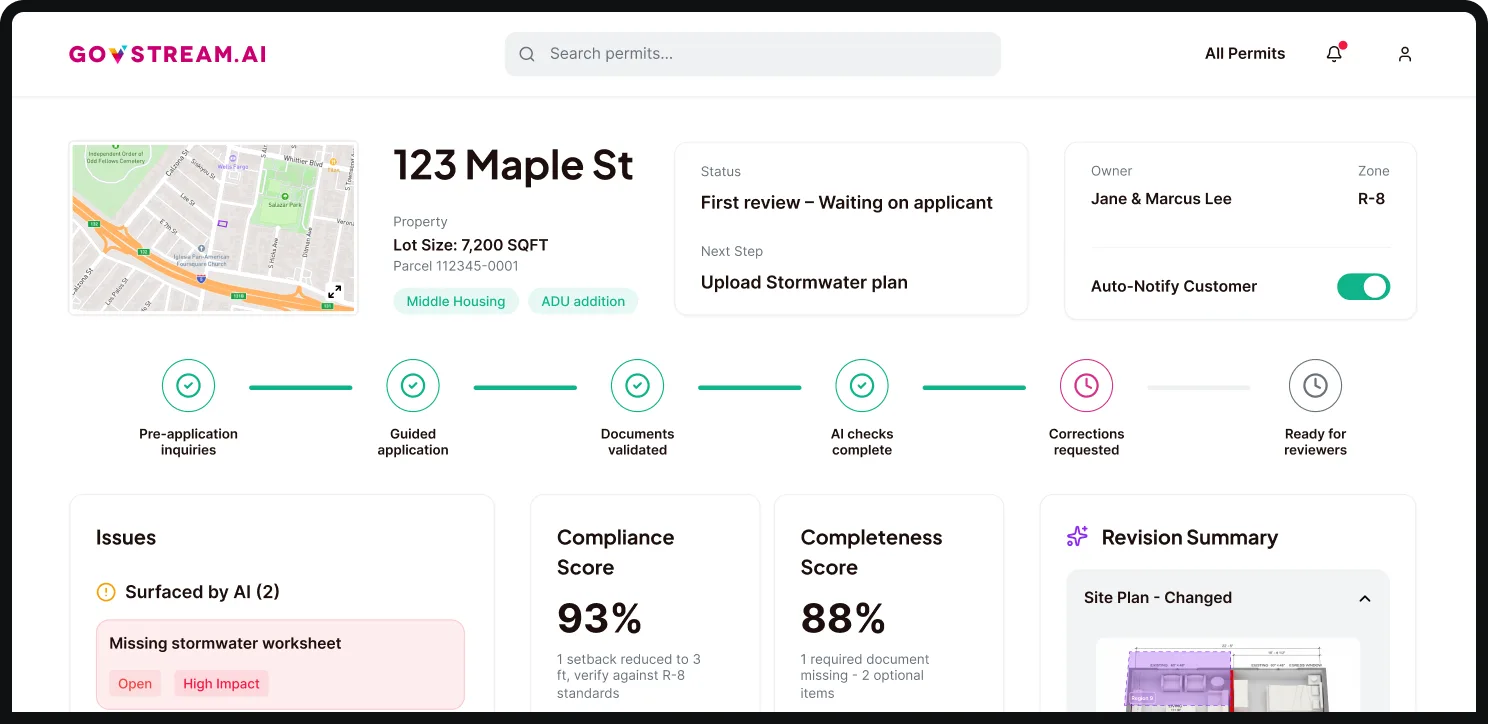
Every row of data was someone's dream home
Why permitting, of all things, became the problem I had to spend the next decade solving.

People always ask me why I started a company to focus on permitting. I'll get to that, but first let me tell you a story.
People always ask me why I started a company to focus on permitting. I'll get to that, but first let me tell you a story.
I was at the Apple Store getting my phone screen replaced. The Genius Bar employee asked me what I did. I told them we speed up city permitting so people can build more housing. A few minutes into our back-and-forth, a customer sitting nearby turned to me and said, "That's really cool. I love it. It's badly needed." Of course, on my way out, I asked if they were in tech, and tried to recruit them.
Everyday people don't need any translation to connect our work with outcomes they care about. That's what I love about Govstream.ai.
That wasn't quite the case in our first GovTech startup.
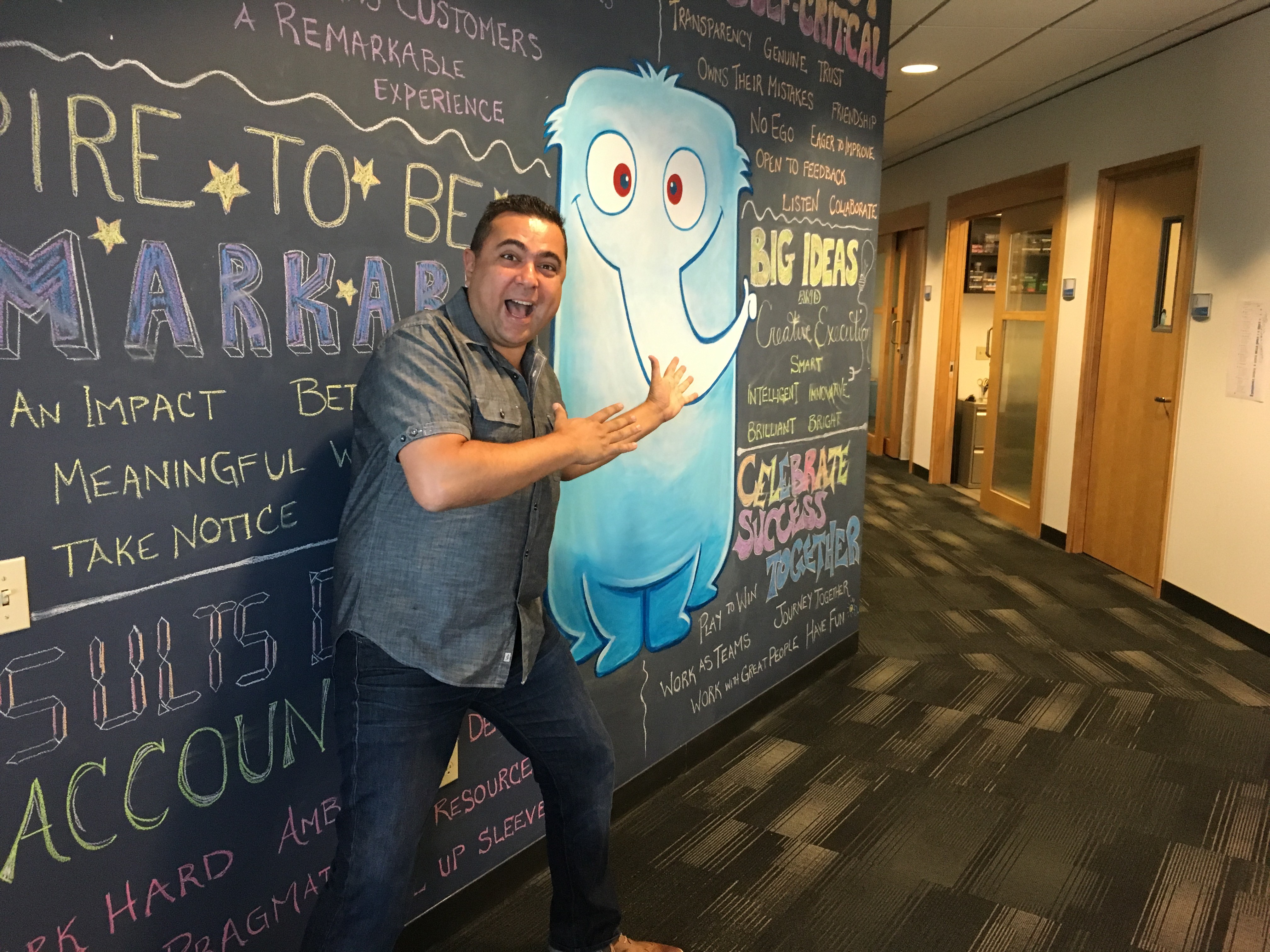
In 2010, I joined Kevin Merritt and a band of five great engineers at a startup called Socrata.
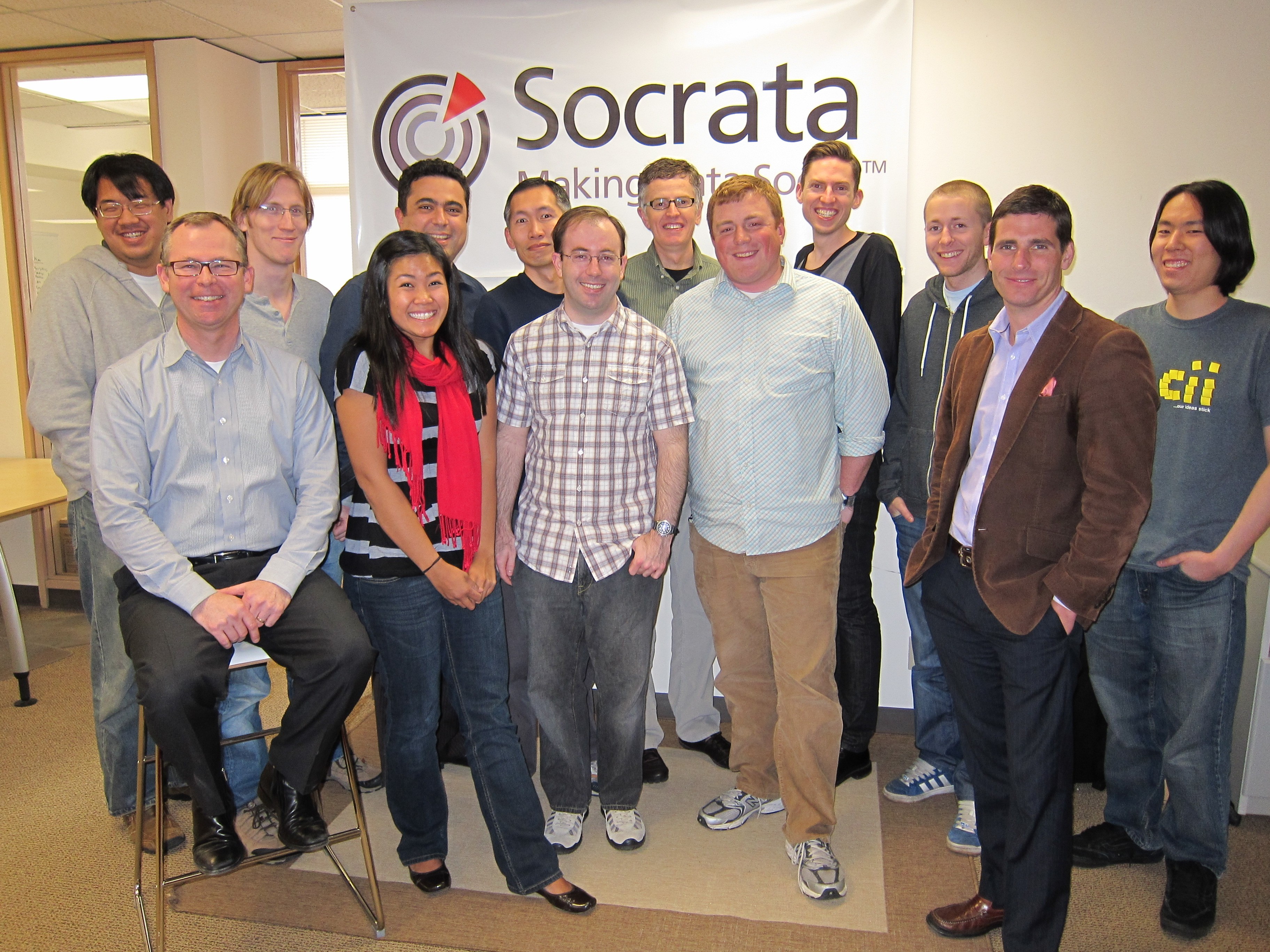
We had two customers: City of Chicago, and Medicare which paid $2,000/month to stream very large data files that were timing out on FTP. (A nod to the OGs of the internet 😀) That was my earliest exposure to the world of GovTech. The learning curve was steep for all of us, but we became one of the very first successful venture-based, cloud-native startups to focus exclusively on the government market. We were proud to serve cities, counties, states and federal agencies, including the White House, not to mention large international institutions like the World Bank and the United Nations. We referred to our work by many names: civic tech, open data, open government...but it all had one common throughline: support government leaders and public servants so that government could succeed in fulfilling its mission. Transparency came first, but data as a catalyst for innovation was a close second.
I got to immerse myself with all the people who cared deeply about the nascent civic innovation movement: Mayors, CIOs, (later) Chief Data Officers, council members, Governors, civic hackers,...and so many startups that spawned from this movement. It really felt like important work that mattered.
And yet, I could not explain what I did to my kids, or to my neighbors, or to anyone who wasn't already inside this movement.
It was all too esoteric. Too theoretical. "Data platforms," "APIs," "ecosystems," "data markets" didn't register with most folks. The closest I got to making this real was when I showed people a map of crime in their neighborhood. Everyone could relate if they saw too many red dots close to home or to their kids' school.
The second most visceral reaction I got was when I showed maps of permits. That one generated a lot of curiosity. Everyone wanted to know if their neighbor had a permit for whatever construction work was waking them up early every morning. 🏗️
Permitting data consistently ranked in the top 10 of every open data portal.
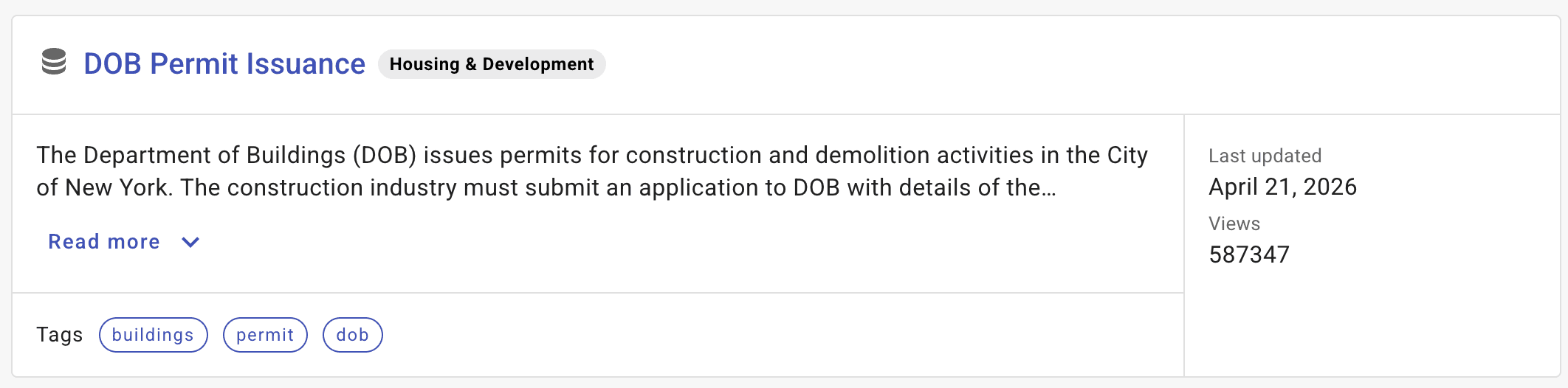
Source: NY Open Data
One day, I was forwarded a support call from a company in Texas. They were complaining that permit data from the City of Chicago wasn't updated overnight. I asked why they cared, and it turned out they used that data to power job-bid notifications to contractors. Brilliant, I thought!
Whenever we built visualization tools, I would always test them on permit data to analyze the location, performance and value of permitted work. Some of the earliest data science work we were involved in was to find clues that might suggest unpermitted work. The community also used permitting data to develop models for fire risk and restaurant health ratings.
It was fascinating how rich permitting data really was, and how storytelling with that data took on a totally different dimension. I loved it.
I loved how easy it was to talk about it with everyday people. I loved how much people cared about it. I loved how every row of data was someone's dream home or project. I also loved that the pulse of a city and the most objective indicator of its growth and development priorities were in those rows of data.
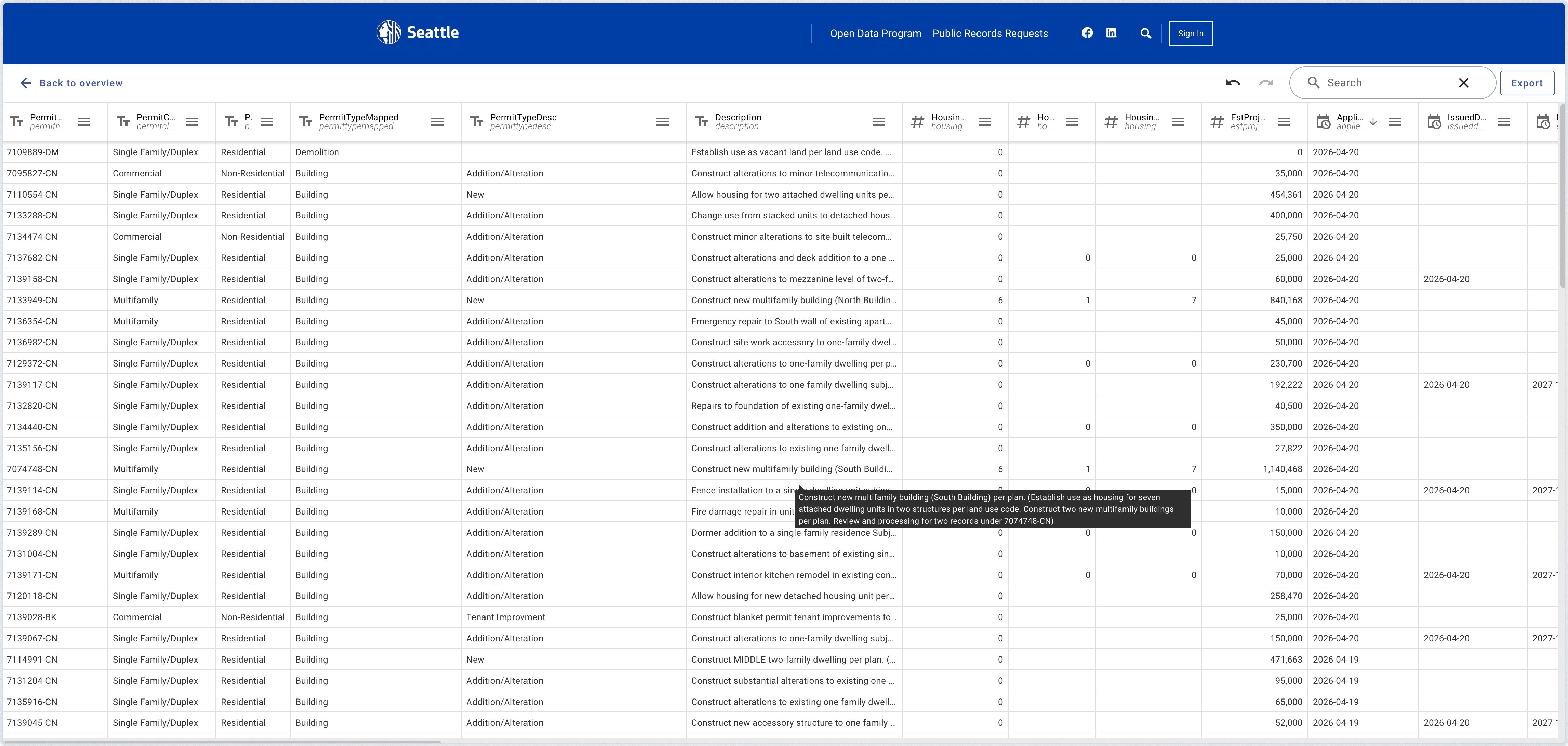
But, I did not love this:
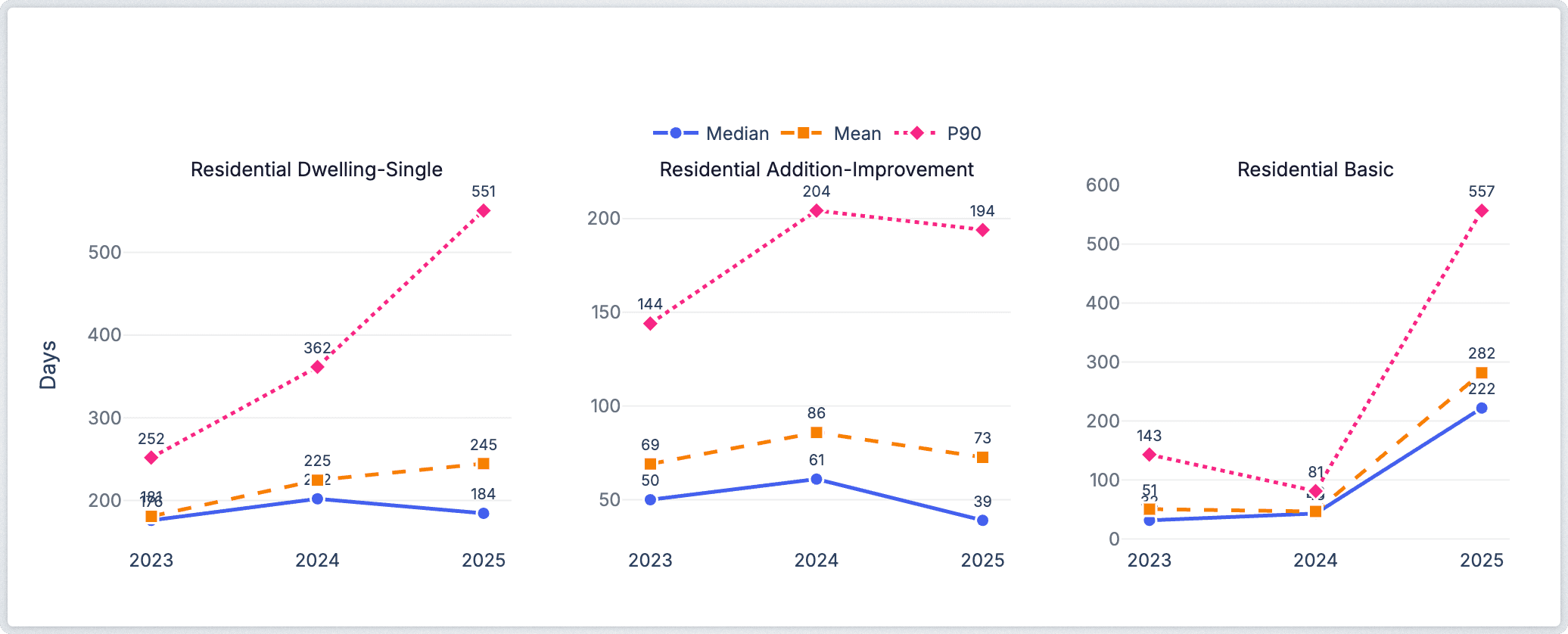
Just how long it takes for permits to process, and how painful the whole experience is for everyone. The builder, the homeowner, the small business owner, and on the other side of the counter, the city leaders and staff who manage community development.
But what made it urgent, not just fascinating, was the housing crisis. Like many other cities, in Seattle, it's impossible to remain immune or indifferent. The most ravaging and cruel consequence of housing scarcity, homelessness, became a reality that punches you in the face every day. Talking to the kids' teachers, or to the folks we've known forever who work at our neighborhood grocery store, also reminded me of how precarious housing is for middle-income earners. Even my younger colleagues in tech, with advanced degrees, struggled to buy a starter home. This is the category of workers that has seen one of the highest rates of wage growth in the last two decades. If they struggle, what chance does anyone else have of ever owning a home, or keeping any disposable income when the minimum income to afford rent in Metro Seattle is $91,000 per year?
The permitting data I'd been fascinated by for years wasn't just interesting anymore. It was a record of how slowly we were responding to a crisis that was already here.
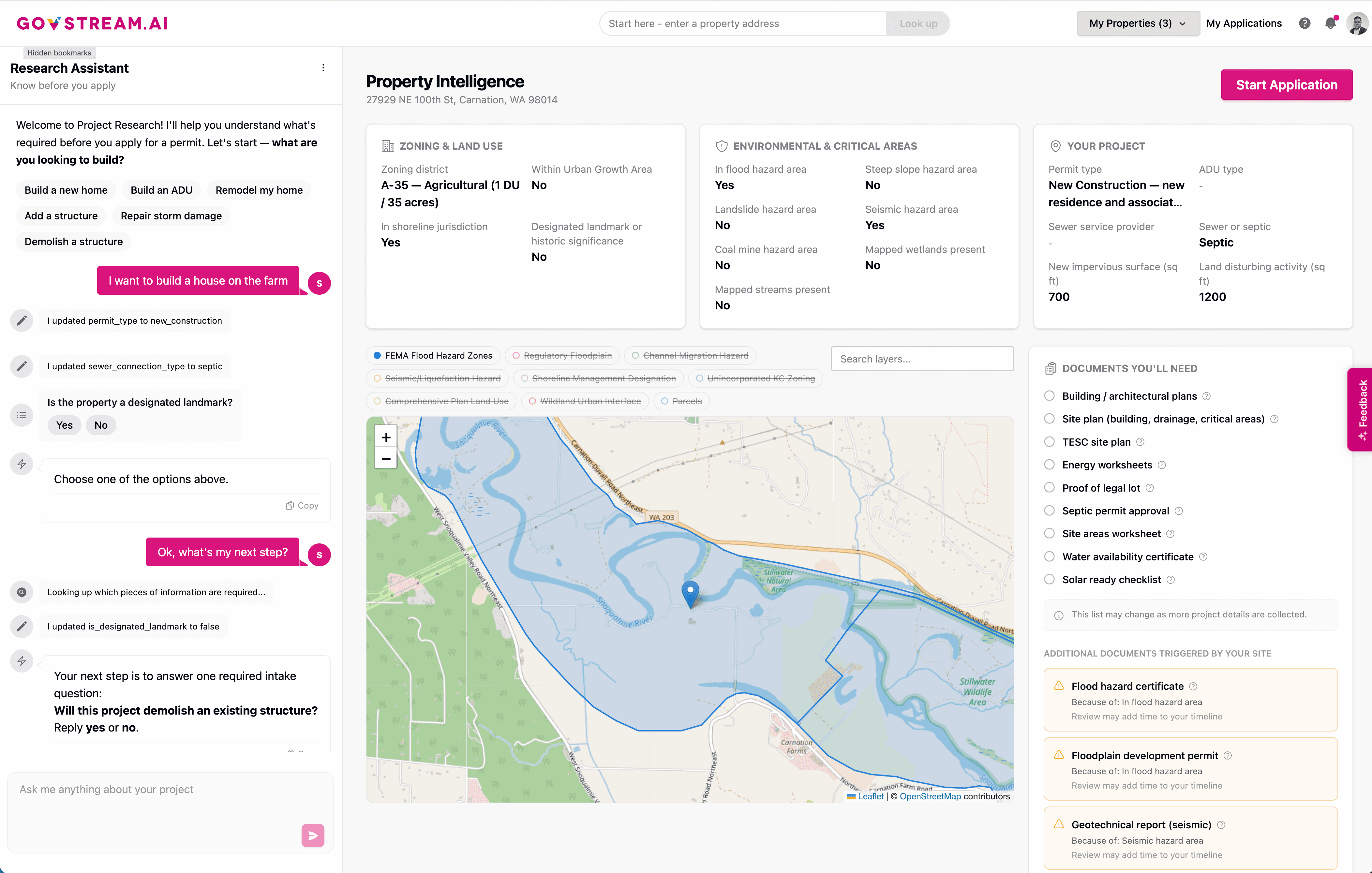
So when it came time to start my company, I knew three things. It had to be GovTech, because I believe in helping governments succeed at their mission. It had to be an AI company, because AI made me rethink what was possible in the workflows I'd spent a decade studying. And it had to be something I could talk to my kids and neighbors about.
Which chronic, consequential problem can this startup help the government solve, where AI can offer a new set of possibilities and a new canvas to innovate with?
It had to be the thing I have been fascinated by for years. It had to be permitting, housing, and the built environment.
I'm lucky to be building this company with a team of great minds, kind hearts, and deep expertise across AI, GovTech, product, and permitting. They're the reason I'm so sure of where this is going.
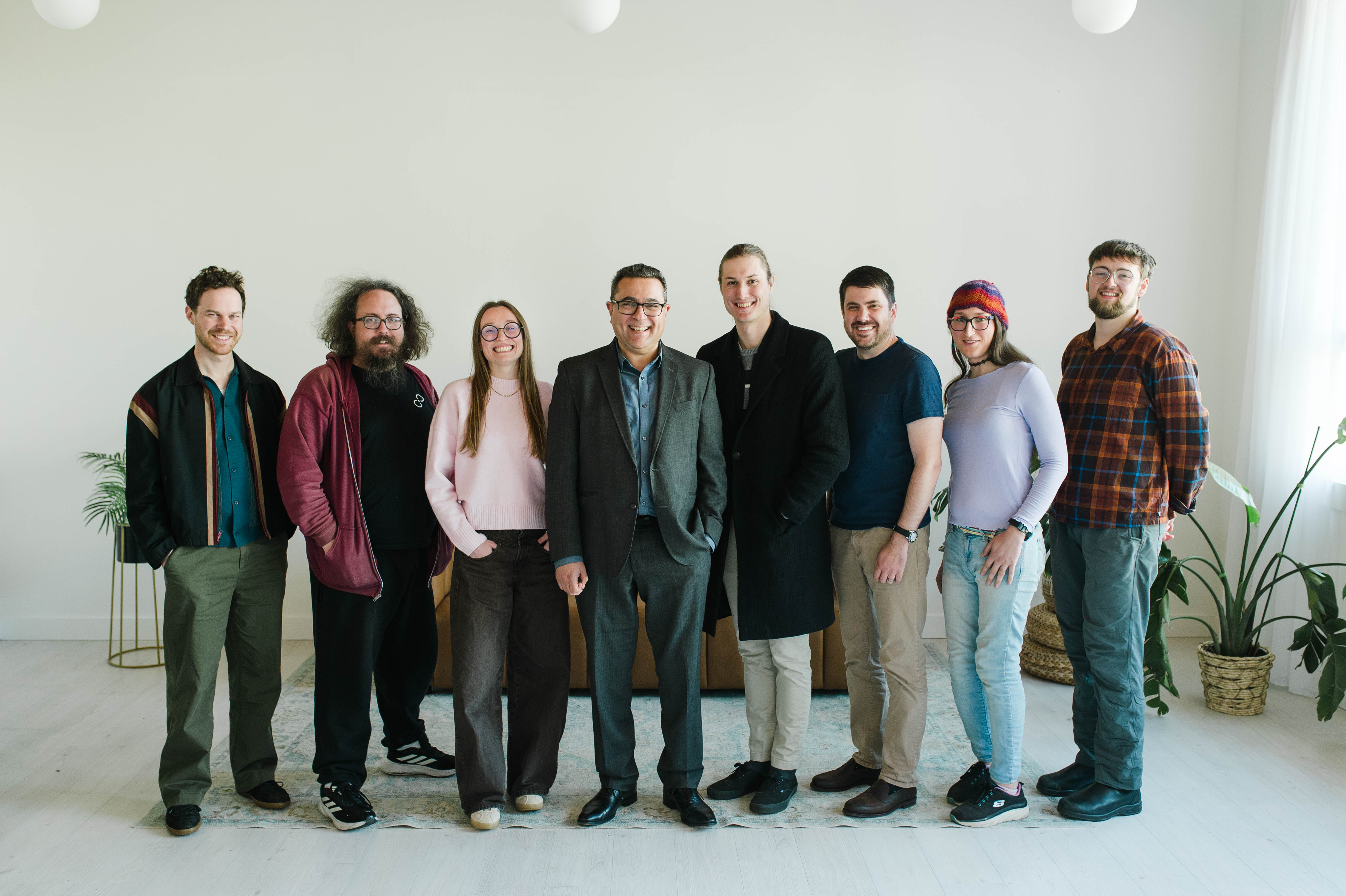
The stories we will tell about transforming permitting have only just begun.
I was at the Apple Store getting my phone screen replaced. The Genius Bar employee asked me what I did. I told them we speed up city permitting so people can build more housing. A few minutes into our back-and-forth, a customer sitting nearby turned to me and said, "That's really cool. I love it. It's badly needed." Of course, on my way out, I asked if they were in tech, and tried to recruit them.
Everyday people don't need any translation to connect our work with outcomes they care about. That's what I love about Govstream.ai.
That wasn't quite the case in our first GovTech startup.
In 2010, I joined Kevin Merritt and a band of five great engineers at a startup called Socrata.
We had two customers: City of Chicago, and Medicare which paid $2,000/month to stream very large data files that were timing out on FTP. (A nod to the OGs of the internet 😀) That was my earliest exposure to the world of GovTech. The learning curve was steep for all of us, but we became one of the very first successful venture-based, cloud-native startups to focus exclusively on the government market. We were proud to serve cities, counties, states and federal agencies, including the White House, not to mention large international institutions like the World Bank and the United Nations. We referred to our work by many names: civic tech, open data, open government...but it all had one common throughline: support government leaders and public servants so that government could succeed in fulfilling its mission. Transparency came first, but data as a catalyst for innovation was a close second.
I got to immerse myself with all the people who cared deeply about the nascent civic innovation movement: Mayors, CIOs, (later) Chief Data Officers, council members, Governors, civic hackers,...and so many startups that spawned from this movement. It really felt like important work that mattered.
And yet, I could not explain what I did to my kids, or to my neighbors, or to anyone who wasn't already inside this movement.
It was all too esoteric. Too theoretical. "Data platforms," "APIs," "ecosystems," "data markets" didn't register with most folks. The closest I got to making this real was when I showed people a map of crime in their neighborhood. Everyone could relate if they saw too many red dots close to home or to their kids' school.
The second most visceral reaction I got was when I showed maps of permits. That one generated a lot of curiosity. Everyone wanted to know if their neighbor had a permit for whatever construction work was waking them up early every morning. 🏗️
Permitting data consistently ranked in the top 10 of every open data portal.
Source: NY Open Data
One day, I was forwarded a support call from a company in Texas. They were complaining that permit data from the City of Chicago wasn't updated overnight. I asked why they cared, and it turned out they used that data to power job-bid notifications to contractors. Brilliant, I thought!
Whenever we built visualization tools, I would always test them on permit data to analyze the location, performance and value of permitted work. Some of the earliest data science work we were involved in was to find clues that might suggest unpermitted work. The community also used permitting data to develop models for fire risk and restaurant health ratings.
It was fascinating how rich permitting data really was, and how storytelling with that data took on a totally different dimension. I loved it.
I loved how easy it was to talk about it with everyday people. I loved how much people cared about it. I loved how every row of data was someone's dream home or project. I also loved that the pulse of a city and the most objective indicator of its growth and development priorities were in those rows of data.
But, I did not love this:
Just how long it takes for permits to process, and how painful the whole experience is for everyone. The builder, the homeowner, the small business owner, and on the other side of the counter, the city leaders and staff who manage community development.
But what made it urgent, not just fascinating, was the housing crisis. Like many other cities, in Seattle, it's impossible to remain immune or indifferent. The most ravaging and cruel consequence of housing scarcity, homelessness, became a reality that punches you in the face every day. Talking to the kids' teachers, or to the folks we've known forever who work at our neighborhood grocery store, also reminded me of how precarious housing is for middle-income earners. Even my younger colleagues in tech, with advanced degrees, struggled to buy a starter home. This is the category of workers that has seen one of the highest rates of wage growth in the last two decades. If they struggle, what chance does anyone else have of ever owning a home, or keeping any disposable income when the minimum income to afford rent in Metro Seattle is $91,000 per year?
The permitting data I'd been fascinated by for years wasn't just interesting anymore. It was a record of how slowly we were responding to a crisis that was already here.
So when it came time to start my company, I knew three things. It had to be GovTech, because I believe in helping governments succeed at their mission. It had to be an AI company, because AI made me rethink what was possible in the workflows I'd spent a decade studying. And it had to be something I could talk to my kids and neighbors about.
Which chronic, consequential problem can this startup help the government solve, where AI can offer a new set of possibilities and a new canvas to innovate with?
It had to be the thing I have been fascinated by for years. It had to be permitting, housing, and the built environment.
I'm lucky to be building this company with a team of great minds, kind hearts, and deep expertise across AI, GovTech, product, and permitting. They're the reason I'm so sure of where this is going.
The stories we will tell about transforming permitting have only just begun.
______________________________________________________________
Govstream.ai builds intelligent AI-powered permitting workflows for cities and counties. Our platform brings continuous feedback, intelligent routing, and real-time decision support to every stage of the permitting process to support staff and guide builders.
______________________________________________________________
Govstream.ai builds intelligent AI-powered permitting workflows for cities and counties. Our platform brings continuous feedback, intelligent routing, and real-time decision support to every stage of the permitting process to support staff and guide builders.

Modern permitting
for growing cities
Modern permitting for growing cities
Govstream.ai helps cities modernize permitting, improve efficiency, and support sustainable growth.
Govstream.ai helps cities modernize permitting, improve efficiency, and support sustainable growth.